




Table of Contents
Facilities management companies support the buildings, systems and workplace services that organisations depend on every day. Their responsibilities can range from cleaning and security to engineering maintenance, statutory inspections, energy management and the operation of complex estates.
Choosing a provider is not simply about finding the largest business or the lowest quote. The right company must have suitable sector experience, qualified personnel, reliable coverage, clear reporting and the capacity to meet the required service levels.
This guide compares 12 leading facilities management companies operating in the UK and explains the commercial, technical and contractual factors businesses should consider before appointing a provider.
Last Updated: 07.09.2026
UK Facilities Management Market Update for 2026
The UK facilities management market continues to consolidate as larger providers acquire regional, technical and specialist businesses.
One of the most important developments came in July 2026, when OCS announced a recommended cash acquisition of Mitie.
The transaction had not been completed at the time of writing and remained subject to the required process and conditions.
The companies are therefore assessed separately in this guide. Details of the proposed transaction and its progress are available through the recommended cash offer for Mitie.
OCS has also strengthened its technical services through acquisitions including EMCOR UK, FES FM and FES Support Services.
This has expanded its engineering workforce and increased its ability to support technically demanding estates.
These developments matter to customers because consolidation can affect:
- Account Management Structures
- Supplier Relationships
- Technology Platforms
- Regional Coverage
- Engineering Capacity
- Subcontractor Arrangements
- Contract Continuity
- Future Procurement Competition
Businesses considering Mitie or OCS should ask how current and proposed integration activity may affect their contract, account team and service delivery.
Existing customers should also monitor formal company announcements rather than assuming that a proposed transaction has already been completed.
How Were These Facilities Management Companies Selected?
The companies in this guide were assessed using publicly available information about their UK operations, services, sectors and facilities management capabilities.
Inclusion is not a paid placement or a guarantee that a provider will be suitable for every organisation.
The principal assessment areas were:
- UK Operational Coverage
- Hard And Soft FM Capability
- Integrated Service Availability
- Engineering Expertise
- Sector Experience
- Compliance Support
- Technology And Reporting
- Sustainability Services
- Ability To Manage Multi-Site Estates
- Contract Flexibility
- Publicly Verifiable Company Information
Large national providers often suit complex estates and multi-site organisations. Smaller or specialist companies may offer closer account management, greater flexibility or deeper expertise in a specific service.
Businesses should use this list to create an initial shortlist before carrying out their own tender, reference and due diligence process.
Top 12 Facilities Management Companies in the UK
1. Mitie
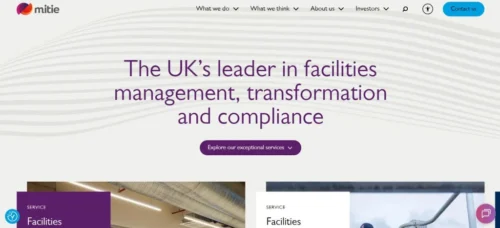
Mitie is one of the UK’s largest facilities management and professional services companies.
It supports organisations across government, defence, healthcare, transport, retail, financial services, manufacturing and critical infrastructure.
Its broad service portfolio includes engineering, cleaning, security, energy management, landscaping, property maintenance and workplace services.
This makes Mitie particularly relevant to organisations seeking to combine several service lines under one contract.
Mitie also places considerable emphasis on technology, asset data and decarbonisation. Its scale enables it to support national estates and operational environments that need round-the-clock coverage.
Best Suited To:
- Large Multi-Site Organisations
- Public-Sector Estates
- Critical Infrastructure
- Regulated Environments
- Businesses Seeking Integrated FM
Main Strengths:
- Extensive UK Coverage
- Broad Hard And Soft FM Services
- Large Engineering And Operational Workforce
- Energy And Decarbonisation Capability
- Experience With Complex National Contracts
Check Before Appointing:
Businesses should confirm which services will be delivered directly, which will use subcontractors and how the proposed OCS acquisition could affect long-term contract arrangements.
2. OCS Group UK
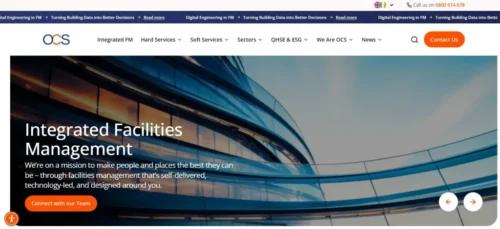
OCS is an international facilities services provider with extensive operations across the UK and Ireland.
Its services include cleaning, security, catering, pest control, hard services, energy management and integrated facilities management.
The company has significantly expanded its engineering capability through acquisitions.
The purchase of EMCOR UK strengthened its position in technical and hard facilities management, while other acquisitions have increased its regional reach and specialist service capacity.
OCS works across aviation, healthcare, education, government, manufacturing, retail, transport and corporate workplaces.
Its combination of traditional soft services and growing engineering capacity makes it suitable for organisations seeking a broad delivery model.
Best Suited To:
- National And Multi-Site Estates
- Healthcare And Education
- Transport And Aviation
- Public-Sector Organisations
- Businesses Requiring Combined Hard And Soft FM
Main Strengths:
- Broad Service Portfolio
- Strong Cleaning And Security Operations
- Expanded Engineering Capability
- National Coverage
- Experience In Public-Facing Environments
Check Before Appointing:
Buyers should clarify how recently acquired businesses will be integrated into the proposed service and whether the named delivery team will operate under a single management and reporting structure.
3. ISS UK
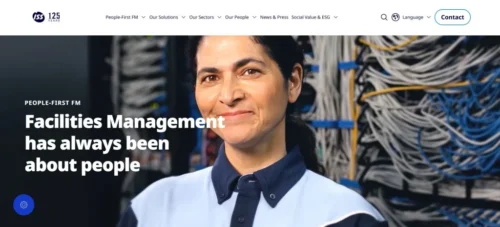
ISS is a global workplace experience and facilities management provider with a substantial UK presence. Its services include cleaning, food, workplace support, technical services, security and integrated FM.
The company’s approach is strongly focused on how people experience the workplace.
This makes it particularly relevant to organisations that want facilities management to support employee satisfaction, productivity and brand standards as well as basic building operations.
ISS serves corporate workplaces, healthcare, education, manufacturing, transport and life sciences.
Its international reach may also benefit multinational organisations that want consistent facilities management standards across several countries.
Best Suited To:
- Corporate Offices
- Multinational Businesses
- Life Sciences
- Manufacturing
- Organisations Focused On Workplace Experience
Main Strengths:
- Global Delivery Capability
- Strong Workplace Experience Services
- Integrated Food And Cleaning Operations
- Technical FM Capability
- Experience Across Complex Corporate Estates
Check Before Appointing:
Organisations should confirm how much flexibility will be available within a standardised global service model and whether local sites can adapt specifications to operational needs.
4. CBRE Global Workplace Solutions
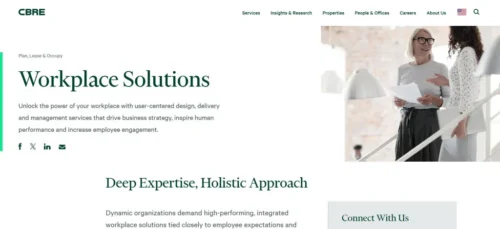
CBRE Global Workplace Solutions combines facilities management with corporate real estate, workplace strategy and property expertise.
It is particularly relevant to organisations that want to connect the operation of their buildings with broader portfolio decisions.
Its services include integrated facilities management, engineering, asset management, workplace experience, maintenance, energy management and technology-enabled reporting.
CBRE GWS works with major occupiers across financial services, technology, life sciences, manufacturing and industrial environments.
Its global reach makes it suitable for organisations with property portfolios extending beyond the UK.
Best Suited To:
- Large Corporate Occupiers
- International Property Portfolios
- Technology And Life Sciences Businesses
- Financial Services
- Organisations Connecting FM With Property Strategy
Main Strengths:
- Corporate Real Estate Expertise
- Global Facilities Management Coverage
- Engineering And Asset Management
- Workplace Strategy
- Portfolio-Level Reporting
Check Before Appointing:
Businesses should establish which services are included within the FM contract and which require separate property, consultancy or project-management appointments.
5. Sodexo UK And Ireland
Sodexo is widely known for food and catering, but it also provides integrated facilities management, technical services, cleaning, security, workplace support and property-related services.
The company has a strong presence in healthcare, education, defence, justice, corporate workplaces and public services.
Its ability to combine catering with wider workplace and facilities operations can be valuable in environments where employee, student, patient or visitor experience is important.
Sodexo may be particularly suitable where food services form a substantial part of the contract alongside cleaning, maintenance and front-of-house support.

Best Suited To:
- Healthcare
- Education
- Defence
- Corporate Workplaces
- Catering-Led FM Contracts
Main Strengths:
- Strong Food And Catering Capability
- Experience In People-Intensive Environments
- Integrated Workplace Services
- Public-Sector Experience
- National And International Coverage
Check Before Appointing:
Buyers should assess whether the proposed solution is primarily catering-led or provides the technical engineering depth required by the estate.
6. Equans UK And Ireland
Equans provides facilities management alongside energy, digital and regeneration services. It is part of the Bouygues group and has a significant presence across the UK.
Its facilities services include engineering, planned maintenance, energy management, compliance, technical operations and workplace support.
Equans is particularly relevant to organisations seeking to combine property maintenance with decarbonisation or energy-performance improvements.
The company serves government, healthcare, education, industry, commercial property and local authority clients.
Best Suited To:
- Energy-Intensive Estates
- Public-Sector Buildings
- Organisations Pursuing Decarbonisation
- Technical And Industrial Sites
- Long-Term Estate Improvement Programmes
Main Strengths:
- Energy And Carbon Expertise
- Technical Facilities Management
- Regeneration Capability
- Digital Building Services
- Experience With Public Assets
Check Before Appointing:
Organisations should separate measurable energy savings from broader sustainability commitments and confirm how performance will be calculated, verified and reported.
7. VINCI Facilities
VINCI Facilities is part of VINCI’s wider building solutions operations. It provides facilities management, engineering, maintenance, asset management and workplace services across the UK.
The company works in defence, healthcare, education, government, infrastructure and commercial property.
Its construction and building-services background can support organisations managing technically complex or long-term estates.
VINCI Facilities may be a strong choice where lifecycle planning, building fabric, engineering maintenance and capital projects need to operate within a coordinated property strategy.
Best Suited To:
- Government Estates
- Defence Environments
- Healthcare
- Education
- Infrastructure And Complex Buildings
Main Strengths:
- Engineering And Building Expertise
- Lifecycle Asset Management
- Public-Sector Experience
- Planned And Reactive Maintenance
- Support For Complex Estates
Check Before Appointing:
Buyers should confirm the boundaries between routine FM, lifecycle replacement and separately priced project work.
8. JLL And Integral
JLL provides workplace, real estate and facilities management services, while Integral operates as its UK engineering and building services capability.
Together, they offer integrated FM, mechanical and electrical maintenance, mobile engineering, workplace management, energy support and property-related services.
The combination may suit organisations looking for technical building maintenance alongside property strategy and workplace advisory services.
It is particularly relevant to corporate occupiers, investors and organisations with diverse commercial property portfolios.
Best Suited To:
- Corporate Real Estate Portfolios
- Commercial Offices
- Investors And Property Owners
- Technical Building Operations
- Multi-Site Businesses
Main Strengths:
- Property And Workplace Expertise
- Engineering Capability
- Mobile Maintenance Coverage
- Asset And Portfolio Management
- International Reach
Check Before Appointing:
Clients should identify whether JLL, Integral or a combination of teams will deliver the contract and how responsibilities will be managed across the different service areas.
9. Compass Group UK And Ireland
Compass Group is best known for food services, but its UK operations also include workplace and facilities support through specialist brands and business units.
Available services can include catering, cleaning, reception, security, guest services, workplace support and selected hard FM activities.
Its food-service scale is especially valuable for large workplaces, education, healthcare and public environments.
Compass may be most suitable when catering and workplace experience are central to the requirement rather than a secondary addition to an engineering-led contract.
Best Suited To:
- Catering-Led Workplaces
- Healthcare And Education
- Large Corporate Sites
- Venues And Public Environments
- Employee Experience Programmes
Main Strengths:
- Market-Leading Food Services
- Front-Of-House Support
- Cleaning And Workplace Services
- Large Operational Workforce
- Experience At High-Footfall Locations
Check Before Appointing:
Buyers requiring complex engineering should confirm the depth of directly delivered hard FM and identify any services that will be managed through partners.
10. Bellrock
Bellrock provides technology-enabled property and facilities management services across the UK.
Its model combines professional expertise, a managed supply chain and facilities management software.
The company supports maintenance, compliance, property management, lifecycle planning, helpdesk operations and contractor coordination.
It can be useful for organisations that want greater visibility over asset data and supplier performance without necessarily employing one provider to self-deliver every service.
Bellrock works across education, healthcare, commercial property, retail and public-sector estates.

Best Suited To:
- Organisations Managing Multiple Contractors
- Education And Healthcare Estates
- Data-Led Property Management
- Businesses Seeking Centralised Compliance
- Multi-Site Property Portfolios
Main Strengths:
- Facilities Management Technology
- Contractor And Supply-Chain Coordination
- Compliance Reporting
- Asset Management
- Flexible Managed-Service Model
Check Before Appointing:
Businesses should understand which services are delivered directly and which are provided through the managed supply chain. Data ownership and system-export arrangements should also be confirmed.
11. Churchill Group
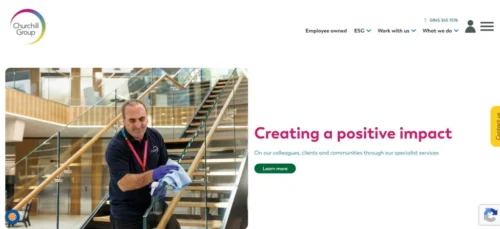
Churchill Group is a UK facilities services company with particular strength in cleaning, security, environmental services and workplace support.
It works across transport, education, healthcare, commercial property, manufacturing and public-sector environments.
The company may appeal to organisations seeking a more specialised soft FM partner rather than a global integrated provider.
Churchill can support national contracts while maintaining a more focused service model than some larger international companies.
Best Suited To:
- Cleaning-Led Contracts
- Security And Soft FM
- Transport Environments
- Education
- Organisations Seeking A UK-Focused Provider
Main Strengths:
- Commercial Cleaning
- Security Services
- Environmental Services
- Sector-Specific Delivery
- Flexible Soft FM Solutions
Check Before Appointing:
Clients needing extensive engineering services should confirm the scope of hard FM delivery and the role of specialist maintenance partners.
12. Pareto Facilities Management
Pareto Facilities Management is an independent UK provider focused on engineering, workplace services and integrated facilities management.
It positions itself as an agile alternative to larger multinational providers. Its services include mechanical and electrical maintenance, compliance, cleaning, security, projects and workplace support.
Pareto may suit organisations that want national capability combined with a more personalised account-management structure.
It has experience in corporate offices, technology environments, commercial property and specialist technical estates.

Best Suited To:
- Corporate Offices
- Technology Businesses
- Commercial Property
- Specialist Technical Sites
- Clients Seeking A More Agile Provider
Main Strengths:
- Engineering-Led FM
- Personalised Account Management
- Workplace Services
- Compliance Support
- Flexible Contract Delivery
Check Before Appointing:
Businesses should confirm the provider’s directly employed coverage in every required region and how specialist or out-of-hours services will be supplied.
Comparison of the Top 12 Facilities Management Companies
| Company | Provider Type | UK Coverage | Main Capabilities | Key Sectors | Best Suited To |
| Mitie | Integrated National Provider | Nationwide | Engineering, Cleaning, Security, Energy And Workplace Services | Government, Healthcare, Transport And Critical Infrastructure | Large And Complex Estates |
| OCS Group UK | Integrated Facilities Provider | Nationwide | Hard FM, Cleaning, Security, Catering And Energy Services | Aviation, Healthcare, Education And Public Sector | Combined Hard And Soft FM |
| ISS UK | Global Workplace Provider | Nationwide And Global | Workplace, Cleaning, Food, Technical Services And Security | Corporate, Life Sciences And Manufacturing | Workplace Experience |
| CBRE GWS | Property And Workplace Provider | Nationwide And Global | Integrated FM, Engineering, Property And Workplace Strategy | Technology, Finance And Life Sciences | Global Corporate Portfolios |
| Sodexo | Catering And Integrated FM Provider | Nationwide And Global | Food, Cleaning, Technical Services And Workplace Support | Healthcare, Education, Defence And Corporate | Catering-Led Integrated FM |
| Equans | Engineering And Energy Provider | Nationwide | Technical FM, Energy, Digital Services And Regeneration | Public Sector, Industry And Healthcare | Decarbonisation And Technical Estates |
| VINCI Facilities | Construction-Linked FM Provider | Nationwide | Engineering, Maintenance, Asset Management And Projects | Defence, Government, Education And Healthcare | Complex Building Portfolios |
| JLL And Integral | Property And Engineering Provider | Nationwide And Global | Engineering, Workplace, Property And Energy Services | Commercial Property And Corporate Offices | Property-Led FM |
| Compass Group | Food And Support Services Provider | Nationwide | Catering, Cleaning, Reception And Workplace Support | Corporate, Healthcare And Education | Food And Workplace Services |
| Bellrock | Technology-Enabled FM Provider | Nationwide | Compliance, Helpdesk, Asset Data And Supply-Chain Management | Education, Healthcare And Commercial Property | Managed Supplier Networks |
| Churchill Group | Soft FM Specialist | Nationwide | Cleaning, Security And Environmental Services | Transport, Education And Commercial Property | Cleaning And Security Contracts |
| Pareto FM | Independent Integrated Provider | UK-Wide | Engineering, Workplace Services And Compliance | Corporate, Technology And Commercial Property | Agile And Personalised FM |
The table provides an initial comparison rather than a definitive ranking. The strongest provider for a national hospital estate may be unsuitable for a small office, while a specialist cleaning company may deliver better value than an integrated provider when only one service is required.
What Services Do Facilities Management Companies Provide?
Facilities management services are generally divided into hard FM, soft FM and integrated facilities management.
Hard Facilities Management
Hard FM covers the physical assets, systems and infrastructure that keep a building safe and operational.
Services commonly include:
- Mechanical And Electrical Maintenance
- Heating, Ventilation And Air Conditioning
- Plumbing
- Electrical Testing
- Fire Alarm Maintenance
- Emergency Lighting
- Lift Maintenance
- Building Fabric Repairs
- Water Hygiene
- Boiler And Plant Maintenance
- Planned Preventative Maintenance
- Reactive Repairs
- Asset Management
- Statutory Inspections
Hard FM is particularly important in hospitals, data centres, factories, laboratories and transport environments where equipment failure could interrupt operations or create safety risks.
Soft Facilities Management
Soft FM covers services that support building users, workplace standards and the daily experience of employees, customers and visitors.
Services commonly include:
- Commercial Cleaning
- Security Guarding
- Reception
- Catering
- Waste Management
- Pest Control
- Grounds Maintenance
- Landscaping
- Mailroom Services
- Washroom Services
- Workplace Experience
- Helpdesk Support
Service quality is often immediately visible to building users. Poor cleaning, reception or security can affect staff wellbeing, customer confidence and brand reputation.
Integrated Facilities Management
Integrated facilities management combines several hard and soft services under one contract and management structure.
It can give an organisation:
- One Account Team
- One Reporting System
- Consistent Service Standards
- Simplified Supplier Management
- Coordinated Compliance Records
- Consolidated Performance Data
- Clearer Commercial Accountability
However, combining everything under one provider can increase supplier dependency. Contracts should include data-export requirements, clear performance remedies and practical exit arrangements.
Hard FM vs Soft FM
| Comparison Area | Hard FM | Soft FM |
| Main Focus | Building Systems And Physical Assets | People And Workplace Services |
| Typical Services | HVAC, Electrical, Plumbing And Fire Systems | Cleaning, Security, Catering And Reception |
| Skills Required | Engineers And Technical Specialists | Operational And Customer-Facing Teams |
| Compliance Importance | Frequently Linked To Statutory Inspections | Often Linked To Hygiene, Safety And Service Standards |
| Main Business Benefit | Reduces Failures And Downtime | Improves Workplace Experience |
| Common Environments | Hospitals, Factories And Data Centres | Offices, Schools, Retail And Hospitality |
| Performance Measures | Uptime, Response Time And Maintenance Completion | Audit Scores, Complaints And User Satisfaction |
Most commercial buildings need both types of service. The decision is whether to appoint separate specialists or place them under one integrated contract.
How Much Do Facilities Management Companies Cost?
There is no standard price for facilities management. Costs depend on the building size, location, service scope, operating hours, asset condition, risk level and staffing requirements.
A single office requiring weekly cleaning and occasional maintenance will have a very different budget from a hospital or multi-site retail estate requiring resident engineers and 24-hour support.
Common Pricing Models
| Pricing Model | How It Works | Common Use |
| Fixed Price | A set fee covers an agreed service scope | Cleaning And Planned Maintenance |
| Cost Plus | The client pays actual costs plus a management fee | Complex Or Changing Contracts |
| Open Book | Costs and supplier margins are disclosed | Large Integrated Contracts |
| Schedule Of Rates | Agreed prices apply to defined tasks | Repairs And Minor Works |
| Time And Materials | Charges reflect labour time and materials used | Reactive Maintenance |
| Per Square Metre | Price is based on serviced floor area | Commercial Cleaning |
| Performance-Linked | Part of the fee depends on agreed results | Energy And Efficiency Contracts |
| Hybrid Model | Different pricing methods apply to different services | Integrated FM |
Additional Contract Costs
Businesses should check whether the quoted price includes:
- Mobilisation
- Asset Surveys
- CAFM Configuration
- Software Licences
- Emergency Callouts
- Out-Of-Hours Labour
- Specialist Subcontractors
- Replacement Parts
- Consumables
- Compliance Testing
- Lifecycle Replacement
- TUPE-Related Employment Costs
- Annual Indexation
- Contract Exit Support
A low headline price may become expensive if essential activities are excluded or charged separately.
How to Choose the Right Facilities Management Company?
A strong procurement process should assess service quality, technical capability, commercial terms and long-term compatibility.
Service Coverage and Industry Experience
Begin by defining exactly what the contract must include. Separate essential services from optional improvements and future requirements.
Ask potential providers for examples involving:
- Similar Buildings
- Comparable Contract Values
- Relevant Operating Hours
- Equivalent Compliance Risks
- Similar Geographic Coverage
- Matching Sector Requirements
A company experienced in managing offices may not automatically have the systems required for healthcare, manufacturing or critical infrastructure.
Compliance and Accreditations
Relevant certifications may include ISO 9001, ISO 14001 and ISO 45001. ISO 41001 is specifically concerned with facilities management systems and the effective delivery of FM services in support of organisational objectives.
Other relevant credentials can include:
- CHAS
- SafeContractor
- Construction line
- Cyber Essentials
- SIA Approved Contractor Scheme
- BICSc Training
- Gas Safe Registration
- NICEIC Registration
- Sector-Specific Certifications
Accreditations should be checked for their scope and validity. Membership of a professional organisation is not the same as independent certification.
Technology and Reporting
The provider should explain how its technology will help the client manage risks and performance.
Important questions include:
- Who Owns The Asset Data?
- Can Records Be Exported?
- Are Engineers Updating Tasks In Real Time?
- Can Clients Access Certificates And Photographs?
- Does The System Track Subcontractors?
- Can It Integrate With Existing Property Systems?
- How Is Sensitive Data Protected?
- What Happens If The Platform Is Unavailable?
- Will The Client Retain Access When The Contract Ends?
Dashboards are only useful when the underlying information is accurate, current and supported by evidence.
Customer Reviews and References
Online reviews can identify recurring concerns about communication, reliability or incomplete work. However, public ratings rarely provide enough evidence for a complex commercial appointment.
Businesses should also request:
- References From Comparable Clients
- Relevant Case Studies
- Measurable Performance Results
- Evidence Of Contract Renewals
- Complaint And Escalation Procedures
- Examples Of Service Recovery
- Site Visits
- Meetings With The Proposed Account Team
Reviews are an initial reputation signal. References, performance data and tender evidence provide a stronger basis for selection.
Pricing and Contract Terms
Quotes should be compared against an identical service specification. A cheaper proposal may exclude essential staffing, materials or compliance activities.
The contract should clearly identify:
- Included Services
- Excluded Services
- Operating Hours
- Response Categories
- Staffing Levels
- Subcontracted Activities
- Indexation Rules
- Change-Control Procedures
- Performance Remedies
- Liability And Insurance
- Data Ownership
- Termination Rights
- Exit Assistance
Legal and commercial advice may be appropriate for large, high-risk or long-term contracts.
What Should an FM Service Level Agreement Include?
A service level agreement should turn broad promises into measurable obligations. It needs to define what will be measured, how the results will be reported and what happens when targets are missed.
| Service Area | Example Performance Measure |
| Emergency Repairs | Attendance Within The Contracted Response Time |
| Planned Maintenance | Percentage Completed By The Due Date |
| First-Time Fix | Percentage Resolved Without A Repeat Visit |
| Helpdesk | Call Answering And Ticket Acknowledgement Time |
| Cleaning | Site Audit Score |
| Compliance | Percentage Of Statutory Tasks Completed On Time |
| Critical Assets | Equipment Availability Or Uptime |
| Complaints | Resolution Within The Agreed Period |
| Reporting | Reports Delivered Accurately And On Time |
| Sustainability | Energy, Water, Waste Or Carbon Performance |
Targets should reflect the operational risk of each site. A critical equipment failure in a hospital requires a different response from a minor repair in a standard office.
The agreement should also establish escalation procedures, service credits, improvement plans and circumstances in which repeated poor performance may lead to termination.
What Happens During FM Contract Mobilisation?
Mobilisation is the period between contract award and full service commencement. Weak mobilisation can cause missed maintenance, incomplete records, staffing problems and confusion over responsibilities.
A mobilisation plan should cover:
- Site Surveys
- Asset Verification
- Compliance Record Transfer
- Staff Consultation
- TUPE Assessment
- Subcontractor Review
- CAFM Setup
- Helpdesk Configuration
- Access And Permit Arrangements
- Spare Parts And Stock
- Emergency Procedures
- Communication With Building Users
- Day-One Contingency Plans
TUPE may apply when an organisation outsources an in-house service, transfers work to a new contractor or brings an outsourced service back in-house.
Government information on business transfers and TUPE explains how employees may be protected during service provision changes.
Specialist employment advice should be obtained where TUPE may apply. Staff information, consultation and employment liabilities can materially affect the mobilisation timetable and contract cost.
Outsourcing also does not remove every responsibility from the client.
Organisations must continue to select competent contractors, share relevant risk information, monitor delivery and understand which party holds each statutory duty.
In-House vs Outsourced Facilities Management
| Delivery Model | Advantages | Considerations | Best Suited To |
| In-House FM | Direct Control And Internal Knowledge | Requires Recruitment, Training And Management | Organisations With Stable Specialist Needs |
| Single-Service Outsourcing | Access To Specialist Expertise | Several Suppliers May Need Coordination | Smaller Sites And Defined Services |
| Integrated FM | One Provider And Reporting Structure | Greater Supplier Dependency | Large And Multi-Site Estates |
| Managing-Agent Model | Independent Supplier Coordination | Responsibilities Must Be Clearly Divided | Complex Supplier Networks |
| Hybrid FM | Retains Strategic Internal Control | Internal And External Teams Must Cooperate | Organisations Wanting Flexibility |
The best model depends on internal expertise, estate size, risk and the organisation’s willingness to manage suppliers.
A hybrid model is often suitable where the business retains an internal facilities manager but outsources engineering, cleaning, security and other operational work.
Facilities Management Supplier Evaluation Checklist
Before appointing a provider, confirm the following:
- Define The Complete Service Scope
- Separate Essential And Optional Services
- Check Relevant Sector Experience
- Verify Geographic Coverage
- Confirm Direct And Subcontracted Delivery
- Review Accreditations
- Assess Financial Stability
- Obtain Comparable Client References
- Meet The Proposed Account Team
- Inspect Technology And Reporting
- Confirm Data Ownership
- Agree Response Times
- Define Performance Measures
- Review Emergency Arrangements
- Examine Mobilisation Plans
- Assess TUPE Implications
- Identify Additional Charges
- Review Insurance And Liability
- Include Exit Assistance
- Document Every Commercial Assumption
A structured evaluation prevents brand recognition or headline price from dominating the final decision.
Conclusion
The leading facilities management companies in the UK offer different combinations of engineering, workplace, cleaning, security, catering, energy and property services.
Mitie, OCS and ISS provide broad integrated capabilities, while CBRE GWS and JLL connect FM with property strategy.
Equans and VINCI Facilities are strong technical options, while Bellrock, Churchill and Pareto offer more specialised models.
The right provider is the company that can demonstrate relevant experience, reliable delivery, transparent reporting and a contract structure suited to the organisation’s buildings, risks and long-term plans.
Frequently Asked Questions
What Does a Facilities Management Company Do?
A facilities management company manages the services required to keep buildings safe, clean, compliant and operational. These services may include maintenance, cleaning, security, catering, reception, waste management and energy support.
Which Is the Best Facilities Management Company in the UK?
There is no single best provider for every organisation. The right choice depends on the required services, estate size, sector, location, compliance risks, technology needs and budget.
What Is the Difference Between Hard FM and Soft FM?
Hard FM covers physical building systems such as HVAC, electrical equipment, plumbing and fire systems. Soft FM covers people-facing services such as cleaning, security, catering and reception.
How Much Does Facilities Management Cost?
Costs depend on the service scope, building size, asset condition, staffing, location and response requirements. Businesses should compare quotes against the same specification and check for excluded costs.
Can One FM Company Manage Multiple Sites?
Yes. Many national facilities management companies manage retail, healthcare, education, government and corporate estates across multiple UK locations.
Do Facilities Management Companies Offer 24-Hour Support?
Many providers offer 24-hour helpdesk and emergency-response services. Availability, response time and additional charges should be stated clearly in the contract.
Does TUPE Apply When Changing FM Providers?
TUPE may apply when services move between contractors, are outsourced or are brought back in-house. Whether it applies depends on the circumstances and affected employee group.
What Should Be Included in an FM Service Level Agreement?
An SLA should define response times, maintenance targets, audit standards, reporting requirements, escalation procedures, performance remedies and responsibilities for both the provider and client.
