



Table of Contents
To cancel car tax in the UK, the registered keeper must tell the Driver and Vehicle Licensing Agency, or DVLA, that the vehicle has been sold, transferred, taken off the road with a SORN, written off, scrapped, stolen, permanently exported or registered in a tax-exempt class.
Vehicle tax cannot simply be cancelled because the owner is driving less or wants to stop making payments. There must be a qualifying change in the vehicle’s ownership, use or tax status.
Once DVLA receives the correct notification, it cancels the Vehicle Excise Duty and any associated Direct Debit. A refund cheque is then issued for any complete unused months of vehicle tax. Partial months are not refunded.
How Do You Cancel Car Tax in the UK?
The process depends on why the vehicle no longer needs to be taxed.
In most situations, the owner does not submit a separate application asking DVLA to “cancel” the tax. Instead, they report what has happened to the vehicle. DVLA then cancels the vehicle tax automatically.
| Reason for cancelling car tax | What the registered keeper must do |
| The vehicle has been sold or transferred | Tell DVLA about the new keeper |
| The vehicle is being kept off the public road | Make a Statutory Off Road Notification |
| An insurer has written off and taken the vehicle | Tell DVLA it has been transferred to the insurer |
| The vehicle has been scrapped | Use an authorised treatment facility and notify DVLA |
| The vehicle has been stolen | Report the theft and follow the stolen vehicle process |
| The vehicle is leaving the UK permanently | Complete the permanent export process |
| The vehicle has become tax-exempt | Change it to the correct vehicle tax class |
The official vehicle tax refund guidance states that these are the qualifying circumstances in which car tax can be cancelled. There is no general option to cancel vehicle tax while continuing to keep or use the vehicle on a public road.
What Is the Quickest Way to Cancel Car Tax?
The quickest method is normally to use the relevant DVLA online service.
The exact service depends on what has happened to the vehicle. For example, someone who has sold a car should use the service for reporting a sale or transfer, while someone keeping a car in a garage should make a SORN.
The basic process is:
- Identify the qualifying reason for cancelling the tax.
- Gather the V5C log book and vehicle registration details.
- Complete the appropriate DVLA online or postal notification.
- Keep the confirmation showing that DVLA has received the information.
- Wait for the automatic refund cheque if complete unused months remain.
Online notifications are generally preferable because the vehicle record can be updated more quickly than when documents are sent by post.
How Do You Cancel Car Tax After Selling a Car?
When a vehicle is sold, transferred, part-exchanged or given to someone else, the previous keeper must tell DVLA.
The seller can normally use the official sold or transferred vehicle service. Details from the V5C log book will be needed to complete the notification.
After DVLA receives the information:
- The seller’s vehicle tax is cancelled
- Any vehicle tax Direct Debit is stopped
- A refund is calculated for complete remaining months
- The new keeper is recorded
- The buyer must tax the vehicle before driving it
Vehicle tax does not transfer to the buyer. Even when the seller has paid for a full year, the new keeper must arrange their own vehicle tax before using the vehicle on a public road.
Keeping the log book details accurate is also important because DVLA sends the refund to the name and address recorded on the V5C. Drivers who have recently moved should understand when a vehicle registration certificate must be updated.
Can You Cancel Car Tax Without a V5C Log Book?
It may still be possible to tell DVLA about a sale or transfer without a V5C, but the process is less straightforward.
If a vehicle has been sold or transferred without a log book, the former keeper should write to DVLA and provide:
- Their name and address
- The vehicle registration number
- The vehicle make and model
- The exact date of the sale or transfer
- The new keeper’s or motor trader’s name and address
The letter should be sent to:
DVLA
Swansea
SA99 1BA
DVLA’s online sold-vehicle service cannot normally be used if the seller has already posted the V5C or does not have the log book.
How Do You Cancel Car Tax by Making a SORN?
A Statutory Off Road Notification, commonly called a SORN, is the correct way to stop taxing a vehicle that will be kept off the public road.
A vehicle is considered off the road when it is stored somewhere such as:
- A private driveway
- A private garage
- Private land
- A commercial storage facility that is not part of the public highway
It cannot be parked on a public street, public lay-by or other public road while declared SORN.
The registered keeper can make a SORN through GOV.UK online, by telephone or by post. Once the SORN takes effect, DVLA automatically cancels the vehicle tax and refunds any complete remaining months.
When Does a SORN Start?
A SORN may start immediately or from the beginning of the following month, depending on when and how it is made.
It cannot be backdated. This means the keeper should not wait until several weeks after taking the vehicle off the road before notifying DVLA.
A SORN remains valid until the vehicle is:
- Taxed again
- Sold or transferred
- Scrapped
- Permanently exported
It does not need to be renewed every year.
Can You Drive a Vehicle After Cancelling Its Tax with a SORN?
A SORN vehicle cannot normally be driven or kept on a public road.
The principal exception is driving directly to or from a pre-booked MOT or another authorised vehicle test. The appointment should be genuine and arranged before the journey.
Using a SORN vehicle on a public road for another purpose can lead to prosecution and a fine of up to £2,500.
The vehicle should be taxed before it is returned to normal road use.
How Do You Cancel Car Tax When a Vehicle Is Written Off?
If an insurance company writes off and takes possession of the vehicle, the registered keeper must tell DVLA.
For DVLA purposes, transferring a written-off vehicle to an insurer is treated similarly to selling it to the insurance company.
The keeper will usually need:
- The vehicle registration number
- The insurer’s name and postcode
- The 11-digit reference from the relevant section of the V5C log book
After DVLA updates the record, the keeper receives confirmation that they are no longer responsible for the vehicle. Any Direct Debit is cancelled, and a refund is issued for complete unused months of tax.
Failing to tell DVLA that an insurer has taken a written-off vehicle can result in a fine of up to £1,000.
How Do You Cancel Car Tax When Scrapping a Vehicle?
A vehicle must be scrapped through an authorised treatment facility, often called an ATF, scrapyard or breaker’s yard.
The owner should:
- Remove or retain a personalised registration first, where required.
- Take the vehicle to an authorised treatment facility.
- Give the V5C log book to the facility.
- Keep the appropriate yellow section from the V5C.
- Tell DVLA that the vehicle has been taken to the ATF.
It is illegal to scrap a vehicle through an unauthorised operator. The authorised facility can issue a Certificate of Destruction where appropriate.
When DVLA is correctly notified, the vehicle tax is cancelled and any complete unused months are refunded.
How Do You Cancel Car Tax If the Vehicle Is Stolen?
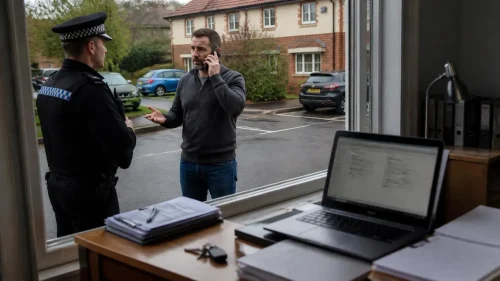
A stolen vehicle should first be reported to the police. The owner should obtain the crime reference number and contact their insurer.
DVLA must also be told about the theft. Once DVLA records that the registered keeper no longer owns the vehicle, the tax is cancelled and any Direct Debit is stopped.
A refund cheque is normally issued for complete unused months and sent to the name and address on the V5C. A separate refund application may be needed when the vehicle had a personalised registration that the owner wants to retain.
The owner should not rely solely on the police or insurer to update every DVLA record. They should follow the complete stolen vehicle process.
How Do You Cancel Car Tax When Permanently Exporting a Vehicle?
A vehicle is treated as permanently exported when it is taken outside the UK for 12 months or more.
The registered keeper should complete the permanent export section of the V5C, detach it and send it to:
DVLA
Swansea
SA99 1BD
The rest of the V5C should be retained because it may be needed to register the vehicle in the destination country.
Where a refund is due, DVLA says it is usually received within four to six weeks. The amount is calculated from the date DVLA receives the permanent export section.
Owners with personalised registrations should transfer or retain the number before exporting the vehicle, or they may lose the right to use it.
Can You Cancel Car Tax If the Vehicle Becomes Exempt?
A vehicle that enters an exempt tax class may no longer require a payment, but it generally still needs to be formally taxed at the £0 rate.
Examples may include qualifying historic vehicles and vehicles used by eligible disabled people. The keeper must apply for or change to the correct tax class rather than simply cancelling payments.
Drivers dealing with an older vehicle can read more about when a car becomes tax-exempt in the UK.
Anyone who has bought a vehicle previously taxed in the disabled class should not assume that the exemption transfers with the car. The process for changing a disabled vehicle tax class to normal usually requires the correct documents and payment for the new tax class.
Electric cars should not automatically be treated as tax-exempt. Vehicle Excise Duty rules for zero-emission vehicles changed from 1 April 2025, so drivers should check the current rates before assuming no payment is required. Further context is available in the guide explaining when electric cars may become mandatory in the UK.
Can You Cancel Car Tax for Any Other Reason?
No. DVLA states that there is no other method of cancelling vehicle tax.
Car tax cannot be cancelled merely because:
- The vehicle is rarely used
- The owner is going on holiday
- The car is undergoing minor repairs
- The owner cannot currently afford the payments
- The vehicle is parked on a public road but not being driven
- The owner wants to change payment frequency
A vehicle kept or used on a public road must remain taxed. If it will genuinely be kept off the public road, the keeper should make a SORN.
Someone who only wants to change from monthly payments to six-monthly or annual payments must cancel the existing Direct Debit and tax the vehicle again using the preferred payment schedule. This is different from cancelling the vehicle tax itself.
Does DVLA Automatically Cancel the Car Tax Direct Debit?

Yes. When DVLA receives a valid notification that the vehicle has been sold, transferred, taken off the road, written off, scrapped, stolen, exported or moved into a qualifying exempt class, the vehicle tax Direct Debit is normally cancelled automatically.
The keeper should not rely on cancelling the payment directly with their bank as a substitute for telling DVLA.
If a person cancels the Direct Debit with their bank while still keeping or using the vehicle, they must tax the vehicle again through another valid payment method. Cancelling the bank instruction alone does not legally declare the vehicle off the road or remove the keeper’s tax responsibility.
What Happens If Another Direct Debit Payment Is Taken?
If DVLA receives the cancellation information shortly before the next payment is due, a scheduled Direct Debit may still be collected.
DVLA says that when this happens, the additional payment should be refunded automatically within 10 working days.
How Is a Car Tax Refund Calculated?

The refund covers only the complete months remaining after DVLA receives the relevant information.
It is not calculated from:
- The date the vehicle was advertised
- The date the owner stopped driving
- The date an agreement was made with a buyer
- The date the insurance claim began
- The date the vehicle was moved into a garage
It is calculated from the date DVLA receives the correct notification.
Car Tax Refund Example
Suppose a vehicle is taxed until 31 December and DVLA receives the sale notification on 14 July.
July is already a partly used month, so it would not be refunded. The refund would normally cover the five complete months from August to December.
If DVLA did not receive the notification until 2 August, August would no longer count as a complete unused month. The refund would then normally cover September to December.
This is why sellers and other registered keepers should notify DVLA promptly.
Are Partial Months of Car Tax Refunded?
No. DVLA refunds only complete unused months.
Even if a vehicle is sold on the first or second day of a month, that month is not normally refunded once it has begun.
The lack of partial-month refunds can mean that both the seller and buyer effectively pay vehicle tax relating to the same calendar month. The seller loses the unused part of the month, while the buyer must tax the vehicle before driving it because tax does not transfer between keepers.
Which Car Tax Charges Are Not Refunded?
DVLA does not refund every fee or surcharge included in the original payment.
The following are excluded:
- Credit card fees
- The 5% surcharge applied to some Direct Debit payment arrangements
- The 10% surcharge on a single six-month payment
The refund may therefore be lower than a simple monthly calculation based on the total amount originally paid.
Is the First-Year Car Tax Payment Fully Refundable?
Special rules can apply to the first vehicle tax payment made when a vehicle is newly registered.
The DVLA calculates the refund using whichever is lower:
- The first tax payment was made when the vehicle was registered
- The standard rate that applies from the second tax payment onwards
This matters for some vehicles with a higher first-year emissions-based rate. The refund may not simply be the unused proportion of the original first-year payment.
How Is the Car Tax Refund Paid?
Vehicle tax refunds are normally paid by cheque.
The cheque is sent to the name and address recorded on the V5C vehicle registration certificate. It is not normally paid directly into the bank account from which the vehicle tax Direct Debit was collected.
Before cancelling the tax, the keeper should check that the V5C address is correct. Updating a driving licence address does not automatically update the address on the V5C. The two records must be changed separately.
This distinction is particularly important for anyone who has recently moved home.
How Long Does a Car Tax Refund Take?
Processing time can vary according to the reason for cancellation and whether the notification was made online or by post.
The general DVLA vehicle tax refund guidance tells motorists to make contact if the cheque has not arrived after eight weeks.
For permanent exports, GOV.UK states that a refund will usually arrive within four to six weeks after DVLA receives the permanent export notification.
A refund connected with a late Direct Debit payment taken after cancellation should normally be returned within 10 working days.
What Should You Do If the Car Tax Refund Does Not Arrive?
The keeper should wait eight weeks from the date DVLA received the correct information.
If the refund has still not arrived, use the official DVLA contact service to find the correct telephone, email or postal route for the issue.
Before making contact, gather:
- The vehicle registration number
- The V5C document reference, if available
- The date the vehicle was sold, scrapped, exported or declared SORN
- The date DVLA was notified
- Any online confirmation or postal tracking information
- The registered keeper’s name and address
- Details of the original vehicle tax payment
The registered keeper should also check whether the V5C contained an old address, as this may explain why the cheque was not received.
What Should You Do If the Refund Cheque Has the Wrong Name?
If a refund cheque is issued in the wrong name, it should be returned to:
Refund Section
DVLA
Swansea
SA99 1AL
The sender should include the correct name and an explanation of the error.
DVLA advises making contact if the replacement cheque does not arrive within four weeks.
Can You Ask DVLA to Pay the Refund into a Bank Account?
The standard refund process uses a cheque sent to the registered keeper’s V5C address.
Drivers should be cautious about emails, text messages or websites claiming that bank details are required to release a DVLA tax refund.
DVLA states that legitimate vehicle tax refunds are issued automatically. It does not send an unsolicited email or text containing a link that asks the recipient to enter bank or payment details to receive the refund.
How Can You Identify a DVLA Car Tax Refund Scam?
A common scam claims that the recipient is owed a vehicle tax refund but must click a link and provide bank details.
Warning signs include:
- An unexpected text or email promising a refund
- A request for bank card or account information
- Pressure to act before a short deadline
- A web address that is not part of GOV.UK
- Spelling, grammar or formatting errors
- A claim that a fee is required to release the refund
DVLA says vehicle tax refunds are automatic and are not claimed through an unsolicited email link. Suspicious emails can be forwarded to the National Cyber Security Centre, while scam texts can usually be forwarded to 7726.
What Happens If You Cancel Payments but Continue Driving?
Cancelling a Direct Debit does not legally cancel vehicle tax.
A vehicle that is kept or used on a public road must either be properly taxed or, when kept entirely off the public road, covered by a valid SORN.
DVLA uses its vehicle register, police and local authority reports, Automatic Number Plate Recognition cameras and wheelclamping contractors to identify untaxed vehicles.
Enforcement can include:
- A late licensing penalty
- Payment of outstanding vehicle tax
- An out-of-court settlement
- Prosecution
- Wheelclamping
- Removal to a vehicle pound
- Disposal of the vehicle in serious cases
There is no single penalty that applies to every untaxed-vehicle case. The action depends on whether the offence was detected through the vehicle record or through the vehicle being seen on a public road.
What Are the Most Common Car Tax Cancellation Mistakes?

- Cancelling the Direct Debit but Not Telling DVLA: Stopping the bank payment does not notify DVLA that the vehicle has been sold or taken off the road.
- Assuming Tax Transfers to the Buyer: Vehicle tax ends when DVLA records a change of keeper. The buyer must tax the vehicle independently.
- Expecting a Refund for Part of a Month: The DVLA refunds only complete months remaining after it receives the notification.
- Sending the Wrong V5C Section: The required section depends on whether the vehicle was sold privately, transferred to a trader, scrapped, written off or exported.
- Making a SORN While the Vehicle Is on a Public Road: A SORN vehicle must be stored away from the public highway.
- Waiting Too Long to Notify DVLA: A delay can reduce the refund because it is calculated from the date DVLA receives the information.
- Failing to Update the V5C Address: The refund cheque can be sent to an old address if the V5C was not updated.
- Using an Unofficial Refund Website: Official vehicle tax services should be accessed through GOV.UK. Third-party websites may charge unnecessary fees or attempt to steal personal information.
What Is the Car Tax Cancellation Checklist?
Before starting, the keeper should confirm:
| Check | Why it matters |
| There is a qualifying cancellation reason | Car tax cannot be cancelled for any reason |
| The V5C is available | Most online services require its reference number |
| The V5C address is correct | The refund cheque is sent to this address |
| DVLA has been notified promptly | Delays can reduce the number of refundable months |
| The vehicle is not being used on a public road | An untaxed or SORN vehicle cannot remain in normal road use |
| The online confirmation has been saved | It provides evidence of the notification date |
| Any personalised registration has been protected | The right to the number may otherwise be lost |
| Eight weeks have passed before chasing | This is DVLA’s general missing-refund timeframe |
Conclusion
To cancel car tax in the UK, the registered keeper must notify DVLA of a qualifying change involving the vehicle. This may include selling or transferring it, declaring it off the road with a SORN, scrapping it, transferring it to an insurer after a write-off, reporting it stolen, permanently exporting it or changing it to an exempt tax class.
DVLA then cancels the vehicle tax and any associated Direct Debit. A refund cheque is issued for complete unused months, calculated from the date DVLA receives the correct information.
Partial months, card fees and certain payment surcharges are not refunded. The cheque is sent to the name and address on the V5C, so the log book should be kept up to date.
Anyone who has not received a refund after eight weeks should contact DVLA through the official GOV.UK contact service.
Frequently Asked Questions
Can I cancel car tax online?
The relevant vehicle change can usually be reported online. For example, a keeper can report a sale, transfer, write-off or SORN through the appropriate GOV.UK service. DVLA then cancels the tax.
Can I cancel car tax while keeping the vehicle?
Yes, but only if the vehicle is kept completely off the public road and a SORN is made. It cannot be kept on a public street while untaxed.
Can I cancel car tax without making a SORN?
A SORN is not needed if the vehicle has been sold, transferred, scrapped, written off, stolen or permanently exported. It is normally needed when the keeper retains the vehicle but stores it off the public road.
Does car tax automatically stop when a car is sold?
It stops after DVLA receives the sale or transfer notification. The seller remains responsible for notifying DVLA rather than assuming the buyer or dealer will do it.
Does car tax transfer to the new owner?
No. The buyer must tax the vehicle before driving it. The seller’s unused complete months are refunded separately.
Do I have to cancel my vehicle tax Direct Debit myself?
Not normally. DVLA cancels it automatically after receiving a valid notification. Simply cancelling the bank instruction does not remove the legal requirement to tax or SORN the vehicle.
How much car tax will DVLA refund?
DVLA refunds the value of complete unused months remaining from the date it receives the notification. Partial months and certain fees or surcharges are excluded.
Why have I not received a refund for the current month?
The current month is not a complete unused month. DVLA does not issue partial-month vehicle tax refunds.
How long should a DVLA car tax refund take?
Timeframes vary, but DVLA advises contacting it if the refund cheque has not arrived after eight weeks. Permanent export refunds usually take four to six weeks.
Can DVLA send the refund to a new address?
The standard cheque is sent to the address on the V5C. The registered keeper should update the V5C promptly or provide the correct address during a relevant postal export process.
What happens if my car tax refund cheque is lost?
Contact DVLA through its official contact service. Be prepared to provide the vehicle registration, registered keeper details and information about the cancellation.
Can I get a refund if my car was stolen?
Yes. Once the correct stolen-vehicle process is completed, DVLA can cancel the tax and refund complete unused months. Special steps may apply to a personalised registration.
Can I get a tax refund if my insurer writes off my car?
Yes. Tell DVLA that the insurer has taken the vehicle. DVLA can then cancel the tax and refund complete remaining months.
Do electric cars qualify for a car tax refund?
An electric vehicle is subject to the same cancellation and refund process when it is sold, SORN, scrapped, written off, stolen or exported. Electric vehicles have generally been subject to Vehicle Excise Duty since April 2025.
Will DVLA email me a link to claim my tax refund?
No. DVLA says vehicle tax refunds are issued automatically and not through unsolicited emails or texts asking for bank details.
Editorial note: Last reviewed on 14 July 2026 against current GOV.UK and DVLA guidance. Vehicle tax procedures can change, so motorists should use the linked official services before taking action. This article provides general information and does not replace individual advice from DVLA.
